
diabetic travelers in Korea: The 30-Minute Myeongdong Miracle: A Real-Life Story
John and Jane, a couple in their mid-40s with three kids, were determined to make unforgettable family memories in South Korea. Jane, who manages Type 1 diabetes, meticulously packed her insulin and testing kits. Their trip started beautifully in Busan with delicious Dwaeji Gukbap (pork soup) and sightseeing.
The next morning, they took the KTX bullet train to Seoul and headed straight to Myeongdong for some famous Kalguksu (knife-cut noodles). After a 30-minute wait in the bustling weekend crowd, they finally sat down. Jane headed to the restroom to administer her pre-meal insulin, but her heart sank. Her insulin pouch was gone. She had left it on the KTX platform back in Busan!
Skipping her dose meant risking severe hypoglycemia, cold sweats, and a ruined trip. Jane was terrified. But John stayed calm. Opening the Naver Map app, he remembered a tip he’d read online. “Don’t worry, Jane. Many clinics here are open on Saturdays.”
Jane was skeptical about navigating a foreign medical system, but the reality was astonishing. Naver Map showed four Internal Medicine clinics within a 10-minute walk, open until 14:00. It was 12:30. John called ahead to confirm, and Jane rushed over. She showed the doctor a photo of her English prescription on her phone. The doctor immediately issued a Korean prescription.
Where was the pharmacy? Right downstairs. In Korea, clinics and pharmacies operate in a symbiotic ecosystem, almost always located in the same building. The English-speaking pharmacist handed her enough insulin for the remaining 8 days of their trip. Jane administered her dose in the pharmacy restroom and was back at the restaurant eating her Kalguksu with her family.
Start to finish, the entire crisis was resolved in just 30 minutes. Thanks to Korea’s advanced, hyper-dense medical system, their trip was saved.
“If you are planning a trip soon, this guide is a must-read for all diabetic travelers in Korea.”
If you are a diabetic traveling to Korea, you can experience this same peace of mind. Here are the 5 essential things you must know to navigate food, travel, and emergencies in South Korea.
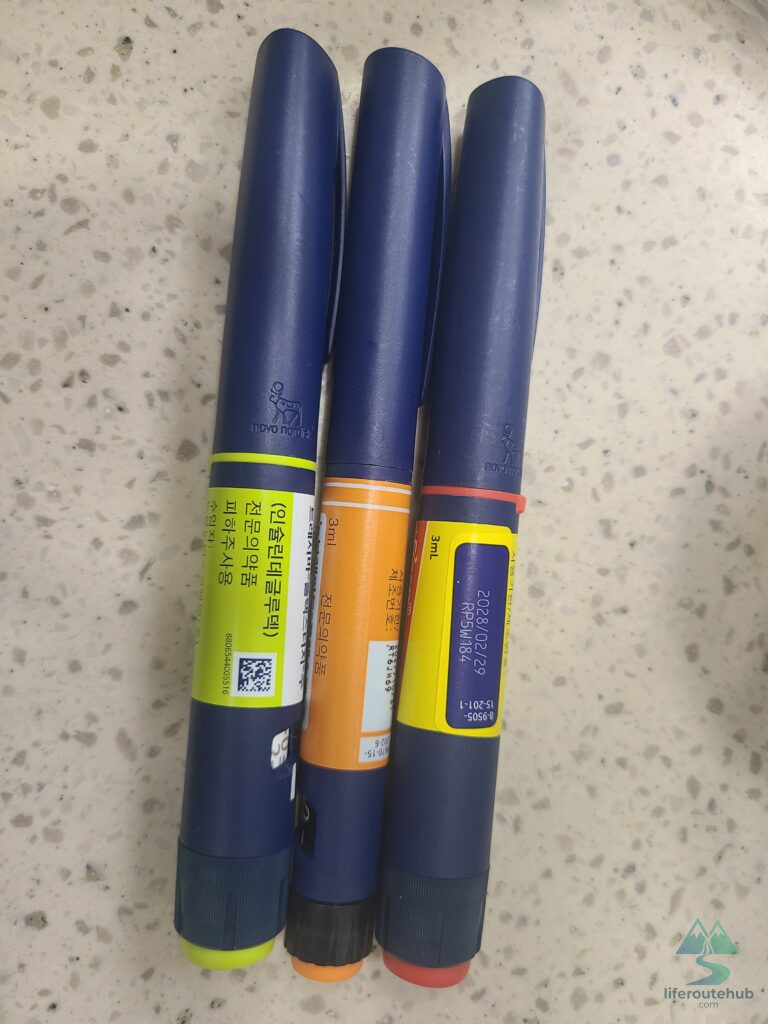
1. Introduction: Essential Guide for Diabetic Travelers in Korea
For a diabetic patient, travel is a continuous series of variables. In a new environment, thorough preparation is your lifeline.
Because traveling in Korea involves a significant amount of walking and using public transit, your risk of both blood sugar spikes and sudden drops (hypoglycemia) increases dramatically. Furthermore, popular Korean foods—like Tteokbokki (spicy rice cakes) or Sundae (blood sausage)—are hidden culprits that can spike your glucose levels much faster than you might expect.
The goal of this guide is to arm you with practical, everyday precautions and a concrete action plan for emergencies (like losing your insulin). Korea has an incredible abundance of medical facilities; knowing how to use them is your ultimate safety net.
(Note: While weekend care is highly accessible, most local clinics are closed on Sundays, meaning you will need to visit an Emergency Room if a crisis hits on a Sunday).
2. Top 4 Precautions for Traveling in Korea
1) Strict Diet Management
“Navigating food is often the biggest challenge for diabetic travelers in Korea.”
Korean cuisine is heavily carbohydrate-based. Be highly cautious of blood sugar spikes when eating Bibimbap, noodle dishes, and popular street foods. Traditional sweet drinks like Sikhye (sweet rice punch), Makgeolli (rice wine), and Sujeonggwa (cinnamon punch) are heavily sweetened and should be consumed with extreme care.
2) Prepare for Hypoglycemia
You will walk a lot in Korea. Always carry emergency snacks like juice or hard candies. The good news? You are never far from a quick sugar fix. South Korea has a massive convenience store culture, with a shop seemingly located every 30 meters!
3) Proper Medication Storage
Ensure you bring a dedicated cooler bag to keep your insulin at the right temperature while you explore. Additionally, always pack extra patches for your Continuous Glucose Monitor (CGM) in case one falls off due to sweat or physical activity.
4) Let’s pay attention to hygiene.
In addition to insulin, you may also need other hygiene products. In particular, you will likely need disinfectants such as alcohol swabs. You will need them for various purposes, such as disinfecting the lancet before inserting it into the skin for blood sugar checks. In such cases, try visiting a nearby pharmacy or Daiso. Daiso is slightly cheaper than pharmacies. A link regarding Daiso is provided below.
3. Emergency Protocol: What If You Lose Your Insulin?
The Golden Rule: No Prescription, No Insulin
“Losing medication is a nightmare for any diabetic travelers in Korea, but don’t panic.”
It is legally impossible to purchase insulin over-the-counter at a Korean pharmacy without a doctor’s prescription. However, getting one is easy. You can visit any nearby Internal Medicine (내과), Pediatrics (소아과), or general clinic.
Navigating Weekend Clinics (The 30-Minute Rule)
Hospitals and clinics are abundant, and many operate on Saturdays—usually until 14:00. Do not arrive at 13:50. Clinics have waiting patients, and you may be turned away. Arrive by 13:30 at the latest to give yourself a 30-minute buffer. Pro-Tip: Always call the clinic before visiting to confirm they are taking patients, as some may close early depending on their situation. Naver Map is the most accurate app for checking business hours and phone numbers in Korea.
Essential Prep: Know Your INN
Do not rely on the brand name of your insulin, as commercial names vary by country. Memorize or write down the International Nonproprietary Name (INN) / active ingredient of your medication.
Digital Proof is Crucial
Always save a clear photo of your original prescription or an English medical certificate from your doctor on your smartphone. This makes the consultation in Korea fast and seamless.
4. Finding a Clinic & Understanding Costs
Korea’s medical infrastructure is dense and efficient. Once you get a prescription from a clinic, you simply take it to the pharmacy, which is almost always located right downstairs or next door.
If you want to know what hospitals are nearby, try using the hospital search site operated by a Korean government agency.
The link below is the hospital search system provided by the Health Insurance Review & Assessment Service (HIRA), which is operated by the Korean government. Although Korean is set as the default language, you can use Google Translate or similar tools.
https://www.hira.or.kr/ra/hosp/getHealthMap.do
If you search on Naver Maps, the hospital’s operating hours are displayed in great detail. Please click the link below.
NAVER MAP LINK
- Daytime Search: Open Naver Map or KakaoMap and search ‘내과’ (Internal Medicine).
- Night/Holidays: Search ‘응급실’ (Emergency Room) or ‘야간진료병원’ (Night Clinic).
- Procedure: Bring your Passport ➔ See the doctor & get a prescription ➔ Buy insulin at the nearby pharmacy.
| Category | Consultation Fee | Insulin Cost | Notes |
| Korean Citizens (NHI Enrolled) | Approx. 5,000 ~ 10,000 KRW | Heavily Subsidized | Covered by National Health Insurance. |
| Foreign Tourists (No NHI) | Approx. 15,000 ~ 30,000 KRW | 20,000 ~ 50,000 KRW (per pen) | 100% out-of-pocket. Prices vary by insulin type. |
| Travel Insurance Claim | N/A | N/A | Crucial: Ask the clinic and pharmacy for a Receipt and Detailed Statement in English for your travel insurance claim back home. |
5. Conclusion: Travel with Peace of Mind
If a medical emergency escalates and you need immediate help, dial 119. The Korean emergency dispatch service provides multi-lingual interpretation support for foreign tourists.
Managing diabetes while traveling doesn’t have to be a source of stress. By simply understanding how the local medical system works—from the convenience of Naver Maps to the symbiotic layout of clinics and pharmacies—you can drastically reduce your anxiety. “With the right preparation, diabetic travelers in Korea can enjoy a perfectly safe and memorable journey.” Prepare thoroughly, keep your digital prescriptions handy, and enjoy a safe, unforgettable journey in South Korea!
조회수: 0