
The Daechi-dong education district is often considered the beating heart of South Korea’s intense academic obsession. When foreign tourists think of Gangnam in Seoul, they typically imagine the glittering skyscrapers, high-end luxury boutiques of Cheongdam-dong, or the pulsating rhythms of K-pop culture. However, there is an entirely different side to Gangnam—one driven not by nighttime entertainment, but by the relentless burning of midnight oil.
Welcome to the ultimate academic battlefield. If you truly want to understand what drives South Korean society, economy, and the mindset of its people, you must step into this hyper-competitive ecosystem.
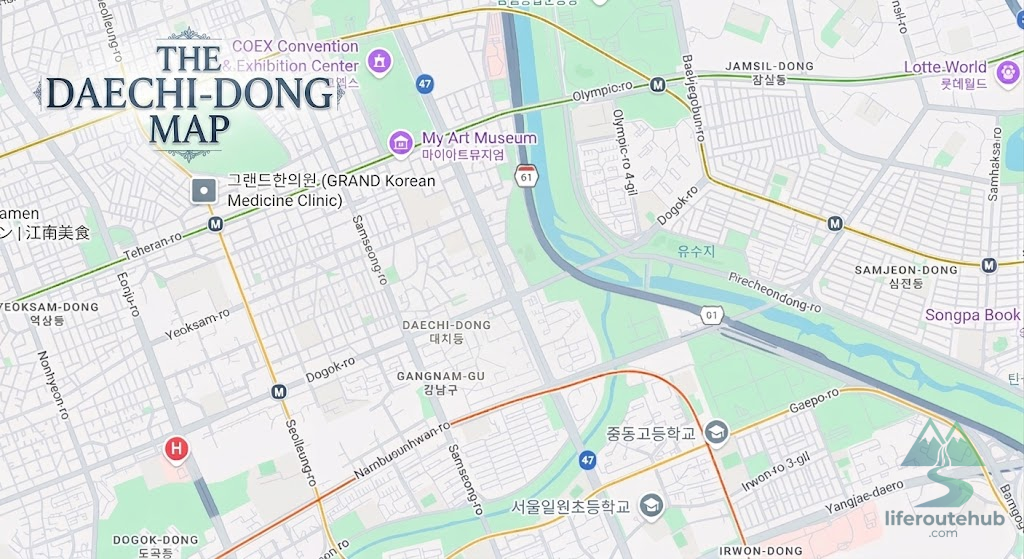
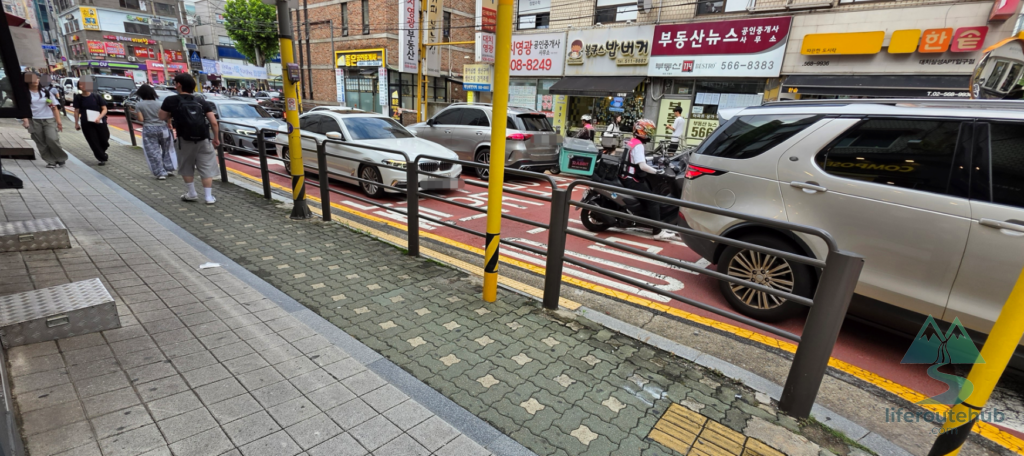
Why the Daechi-dong Education District is Korea’s Hottest Place
South Korea’s passion for education is world-renowned, but the Daechi-dong education district takes it to a profoundly different level. It is not just a residential neighborhood; it is a massive ecosystem dedicated purely to academic excellence and university admissions.
The Real Numbers Behind the Academic Fever
To comprehend why this area is the undisputed “hot place” for Korean parents, let’s look at the concrete data that defines it. (Note: This area is a fortress of wealth and safety.)
Average Real Estate Price
Real Estate Overview: Key Apartment Prices in Daechi-dong, Seoul
Here is a quick snapshot of the current market prices for major residential complexes in Daechi-dong, famous for its premier educational hub in Seoul:
1. Eunma Apartment (48-year-old Reconstruction Project)
Size: 84㎡ Exclusive Area (approx. 34 Pyung)
Market Price: KRW 3.7 Billion – 4.2 Billion
Price per Pyung: approx. KRW 110 Million – 120 Million
2. Raemian Daechi Palace (Modern High-End Complex)
Size: 45 Pyung Type
Market Price: Exceeds KRW 6.3 Billion
Price per Pyung: Nearly KRW 140 Million
3. Daechi Dongbu Centreville (Prime Semi-New Complex)
Size: 55 Pyung Type
Market Price: Over KRW 5.6 Billion
Daily Floating Population
Daily Foot Traffic: The Numbers Breakdown
Total Daily Average: 400,000 – 500,000 people
Weekdays (Mon–Fri): ~450,000 to 480,000 people per day
Weekends (Sat–Sun): ~480,000 to 520,000 people per day (Yes, weekends are actually busier!)
What Makes Daechi-dong’s Crowd So Unique?
Weekends Are Even Wilder Than Weekdays!
While major business districts like Yeouido or Gangnam quiet down on weekends, Daechi-dong peaks! Students flock in from all over the country for intensive weekend-only prep classes, joined by dedicated parents driving them around.
The Daily Traffic Peaks to Watch Out For
4:00 PM – 6:00 PM: The post-school rush when students pour into the academies.
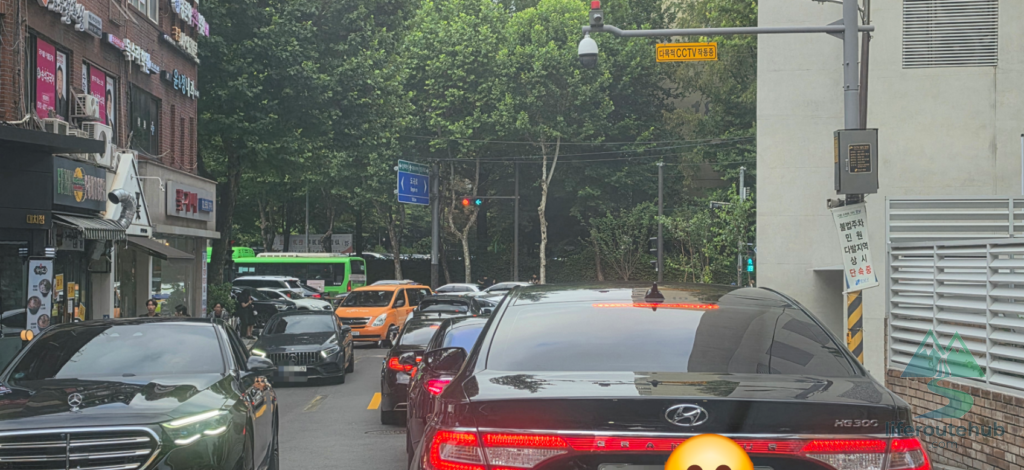
9:30 PM – 10:30 PM (The Ultimate Rush Hour): Class dismissal time! The streets transform into a spectacle of thousands of students spilling out, while parents’ cars line up bumper-to-bumper to pick them up.
Who’s Walking the Streets?
Over 60% of the crowd consists of teenagers and parents in their 40s–50s (mostly mothers) taking care of logistics, pickups, and meals!
Registered Hagwons (Academies)
The World’s Highest Density of Tutoring Centers: Daechi-dong by the Numbers
When it comes to private education, Daechi-dong isn’t just a leader—it’s in a league of its own. Here is a look at just how insanely concentrated this academic hub really is:
Number of Academies (Hagwons): 1,400 to 1,600+
An Overwhelming Dominance: Including private tutoring centers and study cafes, Daechi-dong hosts 1,400 to over 1,600 educational facilities.
How It Compares: Even when compared to Seoul’s other top-tier academic hubs—like Mok-dong (~500 centers) or Junggye-dong (~300–400 centers)—Daechi-dong boasts 3 to 4 times more academies packed into a single neighborhood.
Academy Density Ratio: 61.8% (Ranked #1 Nationwide)
60%+ of Commercial Space Reserved for Education: According to commercial big data analysis (BC Card), over 61.8% of all usable commercial space in Daechi-1-dong is entirely occupied by hagwons and education-related businesses.
Unrivaled Concentration: Daechi-dong leaves all other famous academic districts far behind:
Daechi-1-dong (Gangnam): 61.8% (#1 Nationwide)
Mok-5-dong (Yangcheon): 47.9%
Junggye-1-dong (Nowon): 42.7%
Local Crime Rate
Overall Crime Rate & Regional Characteristics
Low Violent Crime Rate in Residential/Academy Zones:
While Gangnam District as a whole ranks higher in total reported incidents (largely due to nightlife, entertainment, and commercial hubs near Gangnam Station), Daechi-dong shows significantly lower violent crime rates compared to neighboring nightlife districts.
Dominant Offense Types:
The vast majority of incidents reported in the academy area consist of minor property thefts (e.g., misplaced personal items, stolen bicycles) and traffic/parking violations rather than serious offenses.
Top-Tier Security Infrastructure
Highest Density of CCTV Surveillance:
Gangnam District maintains the highest number of public CCTV cameras in Seoul (over 7,000+ units), with heavy density along Daechi-dong’s main avenues (Daechi-ro, Samseong-ro).
Targeted School-Zone & Night Patrols:
To ensure student safety, Gangnam Police Station deploys intensive night patrols between 9:00 PM and 11:00 PM, focusing specifically on academy dismissals, traffic control, and protecting teenagers from potential hazards.
Subjective Safety Perception: Ranked #3 in Seoul
High Resident & Parent Confidence:
According to Seoul Metro safety surveys, while physical crime numbers in commercial zones are monitored, resident-perceived safety in the Gangnam/Daechi area ranks among the top 3 across all 25 Seoul districts (approx. 69.1 out of 100).
Safe Nighttime Environment:
Thanks to bright streetlights, bustling foot traffic until late at night, and continuous parental and security presence, Daechi-dong is widely recognized as one of the safest neighborhoods in Seoul for teenagers walking alone at night.
Prestigious High Schools
Top Prestigious Schools in & Around Daechi-dong (40+ Schools Total)
(Coverage Area: Daechi-dong, Cheongdam-dong, Samseong-dong, Irwon-dong, Gaepo-dong, and adjacent Dogok-dong)
Known as the crown jewel of Korea’s legendary “School District 8” (School District Eight), this area boasts an unmatched concentration of elite elementary, middle, and high schools all packed within a 2-to-3 km radius.
Elementary Schools (17 Schools)
Daechi Area: Daechi, Daecheong, Daegok
Gaepo / Irwon Area: Gaepo, Gaeil, Yangjeon, Yeonghui, Irwon, Daewang
Samseong / Cheongdam Area: Bongeun, Samneung, Cheongdam, Eonbuk
Adjacent Dogok / Yeoksam Area: Dogok, Daedo, Eonju, and more
Middle Schools (12 Schools)
Daechi / Dogok Area: Daecheong, Dankook Univ. Affiliated, Sookmyung Girls’, Eunseong, Yeoksam, Dogok
Gaepo / Irwon Area: Gaewon, Guryong, Joongdong
Samseong / Cheongdam Area: Bongeun, Jinseon Girls’, Cheongdam
High Schools (13 Schools) — The Elite Heart of District 8
Daechi-dong: Dankook Univ. High School, Whimoon High School, Dankook Software High School
Gaepo / Irwon Area: Kyunggi Girls’ High School, Gaepo High School, Joongdong High School, Joongsan High School, Sejong High School, Sudo Electric Technical High School, National Gukak High School
Samseong / Cheongdam Area: Kyunggi High School, Yeongdong High School, Cheongdam High School
Key Academic Highlights
Concentration of Nationally Ranked High Schools:
Elite autonomous private high schools like Whimoon and Joongdong, along with historic prestigious public high schools such as Kyunggi, Dankook, Sookmyung Girls’, and Kyunggi Girls’, are all tightly clustered within a 2-to-3 km radius.
The Ultimate “Elite Pathway” (School District Premium):
This neighborhood offers a direct, seamless pipeline for elite education:
Top Elementary Schools (Daedo / Daechi / Daegok) ➔ Top Middle Schools (Daecheong / Dankook / Yeoksam) ➔ Top High Schools (Whimoon / Joongdong / Dankook).
This unbroken academic ecosystem serves as the single strongest driver for residential real estate demand in the area.
40 Years of History and the Modern “Mencius” Phenomenon
The prestige of the Daechi-dong education district did not happen overnight. It boasts a rich history spanning over 40 years, cementing itself as the traditional stronghold of elite education since the rapid urbanization of Gangnam in the 1970s and 80s. Year after year, this specific neighborhood consistently produces the highest number of successful applicants to Seoul National University (SNU), the crown jewel of Korea’s prestigious universities. You can learn more about the ultra-competitive nature of Korean university admissions on Wikipedia’s SKY Universities page
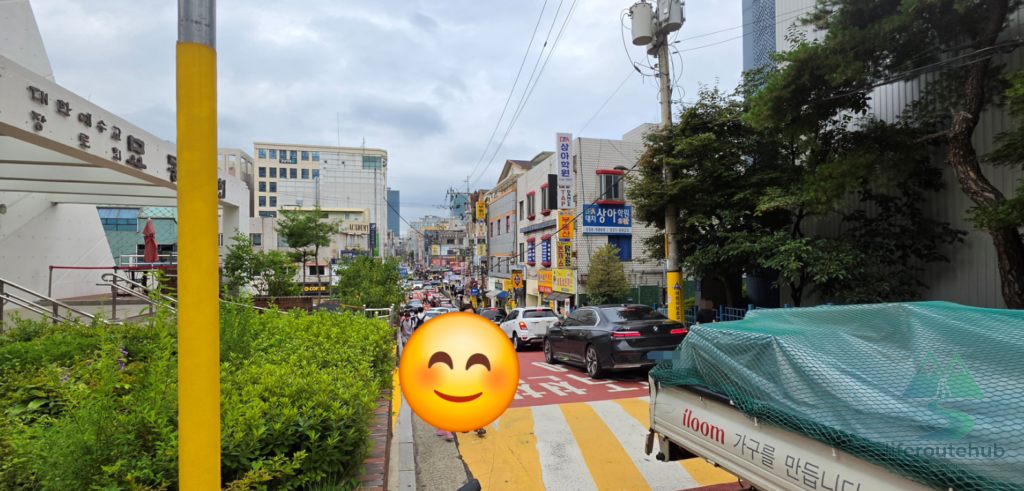
This intense environment has birthed a modern version of the ancient Asian proverb Mengmu Sanqian Zhijiao (맹모삼천지교)—the philosophy that a mother will move her home three times just to secure the perfect educational environment for her child. Korean parents willingly pay astronomical rents and sacrifice their personal lifestyles just to secure a place within these elite school zones. The sheer magnitude of this parental devotion has even inspired global K-drama hits like SKY Castle and Crash Course in Romance.
The Gangnam Wealth Mindset: Education as an Asset
The wealthy residents of Gangnam’s elite hubs—such as Daechi-dong, Dogok-dong, Apgujeong-dong, and Cheongdam-dong—view education not merely as an expense, but as the ultimate form of wealth preservation and inheritance.
Their financial strategies are highly distinct. They focus heavily on defensive asset growth, real estate accumulation in restricted educational zones, and investing heavily in human capital (their children) to maintain their elite social status across generations. This fascinating economic subculture and investment mindset was brilliantly analyzed on a popular Korean radio broadcast. You can listen to the specific episode here
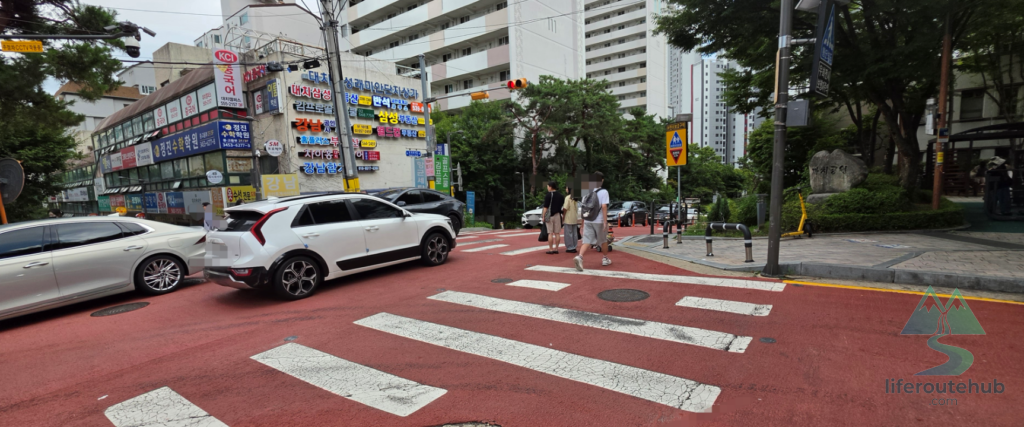
The Midnight Rush Hour: Solidarity, Strategy, and Supercars
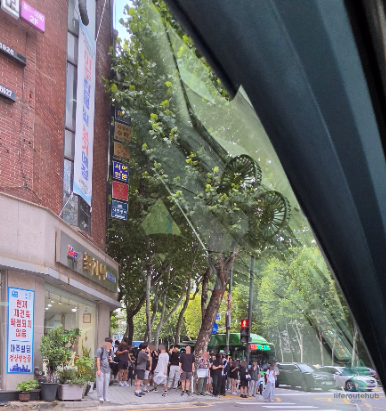
If you walk through the Daechi-dong education district on a weekend or late at night, you will see streets teeming with students carrying heavy backpacks. Interestingly, this shared exhaustion creates a unique psychological effect. Rather than just feeling isolated in their struggles, being surrounded by thousands of peers pulling the exact same late hours gives these students a paradoxical sense of solidarity, security, and a fierce motivation to keep competing. They are all in the trenches together.
When the famous hagwon lectures finally end around 10:00 PM, the main boulevards transform into a spectacle. The roadsides become entirely lined with a parade of luxury cars—Mercedes-Benz, BMWs, Porsches, and even Ferraris—all idling in the dark. These are parents waiting to pick up their exhausted children.
This nightly ritual visually highlights a stark reality: educating a child in Daechi-dong is a monumental investment of not just money, but also time and relentless parental dedication. The financial burden does not stop at academy tuition. To survive this academic battlefield, parents must also hire high-priced admissions consultants to map out a highly strategic, individualized roadmap for their child. It is a grueling, complex process, but for many Korean families, enduring this exact reality is seen as the only reliable path to university admission success.
The Future of the Daechi-dong Education District
Some outsiders might wonder if this intense academic pressure will eventually fade, especially given South Korea’s shifting demographics and declining birth rate. The reality? The heat within the Daechi-dong education district is only expected to rise.
As trust in the public education system wanes and the College Scholastic Ability Test (Suneung) remains notoriously difficult, parents increasingly rely on private academies. Furthermore, in an era dominated by Artificial Intelligence and economic uncertainty, a high-tier academic credential remains the most undeniable insurance policy for a child’s future.
While Daechi-dong reigns supreme, it is part of a broader network of elite educational enclaves. Other major school districts include Mok-dong (famous for its rigorous middle school training) and Junggye-dong (the educational hub of northern Seoul).
The Shadow Side: Mental Pressure and Narrow Horizons
It would be intellectually dishonest to discuss the Daechi-dong education district without addressing the heavy psychological toll it extracts. Children here grow up under immense mental pressure. From a young age, their world is strictly confined to a tight triangle: home, regular school, and the hagwon.
This hyper-focus on test-taking can lead to a narrow perspective on life, where a student’s self-worth is entirely dictated by a report card.
However, despite these obvious critiques, many parents argue that alternative environments do not necessarily offer a better solution. In a highly competitive, merit-based society, the structured predictability of Daechi-dong—where intense hard work directly correlates with measurable output—is still viewed by many as a fairer battleground than the unpredictable variables of alternative education.
A Traveler’s Epilogue: Why You Must Visit This District
If you are a tourist with a deep interest in sociology or education, I highly recommend adding the Daechi-dong education district to your Seoul itinerary.
To me, travel is not just about chasing cheap dopamine hits at famous tourist traps or eating trendy street food. True travel is an act of cultural immersion. It is about observing how people in a completely different environment think, behave, and structure their daily lives. Standing on the streets of Daechi-dong at 10:00 PM—watching those luxury cars line up and thousands of determined students pour out of buildings—offers a profound, visceral understanding of the engine that drives modern Korea.
Hidden Business Opportunities in Elite School Districts
For entrepreneurial minds visiting the area, observing this hyper-specialized ecosystem reveals that education creates vast business markets far beyond traditional tutoring. If you are analyzing business trends, consider these booming sectors within the district:
- Premium Study Cafes: Highly customized spaces featuring ergonomic furniture, white noise systems, and specialized lighting designed to optimize long hours of deep concentration.
- Brain-Food Catering: Premium meal-prep and snack delivery services tailored for students, focusing on cognitive health, stamina, and easy digestion during short breaks.
- Mental Wellness Clinics: Specialized counseling and meditation centers focused on youth anxiety, performance pressure, and stress management.
- Ergonomic Retail: Stores specializing in high-end posture correction chairs, standing desks, and eye-strain prevention technology.
The Daechi-dong education district is more than just a neighborhood; it is a mirror reflecting the ambition, anxiety, and incredible resilience of South Korea. Come see it for yourself.
조회수: 1